
Spinal Cord Stimulation (SCS) is a well-researched pain management treatment used for people with chronic, persistent pain that has not responded adequately to conventional therapies. It involves delivering mild electrical signals to specific nerves within the spinal cord to reduce the perception of pain.
Rather than treating pain at the site of injury, SCS works by modifying how pain signals are transmitted to the brain. It is typically considered when pain continues to interfere with daily function, mobility, sleep or quality of life despite medication, physiotherapy or injections.
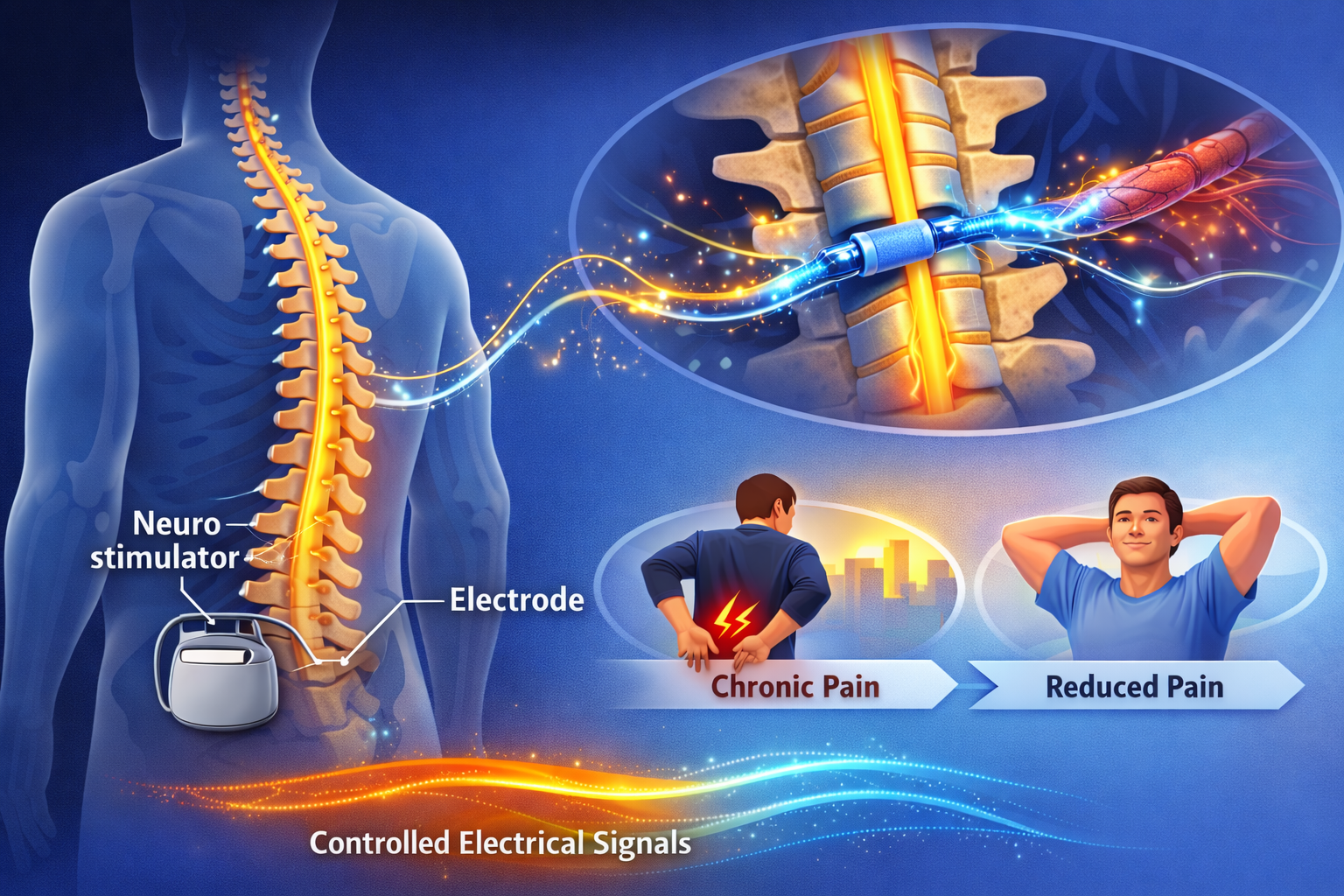
The SCS systems can be categorised in several ways, depending on the power source, stimulation delivery and anatomical target. This includes:
Newer SCS systems offer more refined programming, adaptive stimulation and improved patient comfort. Some devices allow personalised targeting of nerve pathways, enabling more precise pain control while minimising unwanted sensations.
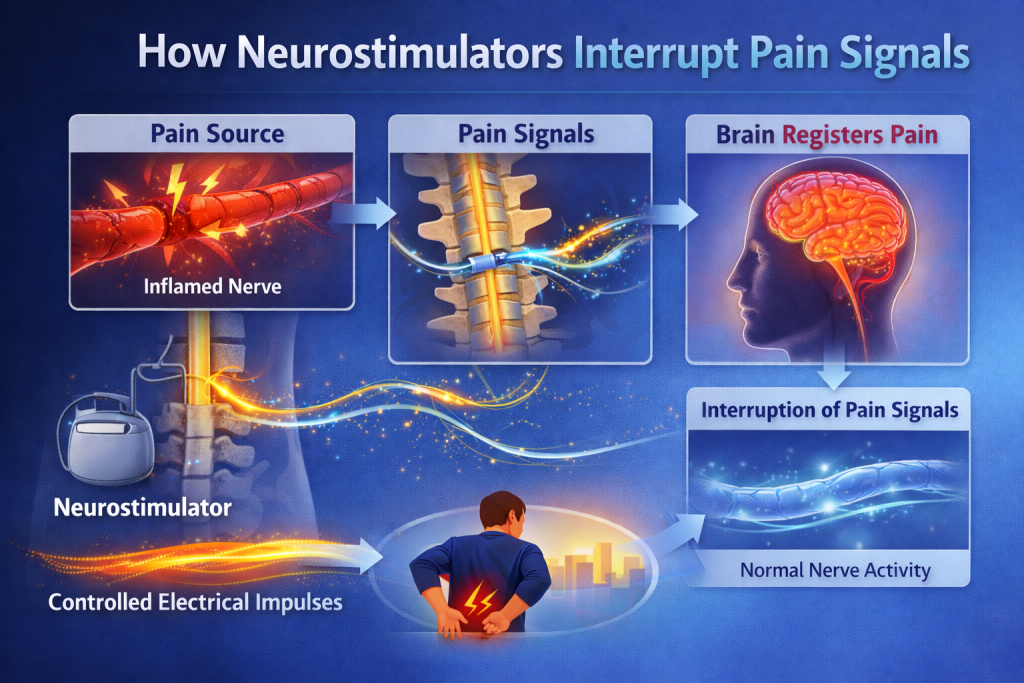
Pain signals normally travel from the body through the spinal cord to the brain. In chronic pain conditions, these signals may become amplified or persist even after tissues have healed.
SCS works by:
This neuromodulation approach does not eliminate the source of pain but helps the nervous system process pain signals differently, leading to meaningful symptom relief.
For suitable patients, SCS offers several advantages within a long-term pain management strategy. This includes, but is not limited to:

SCS is primarily used for neuropathic and complex chronic pain conditions, including:
The procedure is typically performed in stages. This is to ensure the suitability of the patient and the effectiveness of the spinal cord stimulator.
It typically entails:

The recovery phase focuses on protecting the implant, allowing healing and optimising long-term results.
After treatment, patients are usually advised to:
While the results vary depending on the underlying condition and individual nervous system response, many patients experience:
It is essential to recognise that SCS is not a repetitive, session-based treatment. It involves:
The device is programmable and adjustable over time to adapt to changes in pain patterns.

Spinal Cord Stimulation is a modern pain management option for individuals with persistent, nerve-related or complex chronic pain that has not improved with conventional treatments. By modulating pain signals at the spinal level, SCS can offer meaningful relief, improved function and a better quality of life for carefully selected patients.
A thorough assessment is essential to determine suitability and ensure realistic expectations. If chronic pain continues to limit your daily life despite treatment, consulting a pain specialist can help clarify whether SCS may be appropriate for you.
SCS may be considered when chronic pain continues despite medication, physiotherapy, injections or other interventional treatments.
No. SCS is most effective for nerve-related or complex chronic pain and requires careful assessment to ensure it is appropriate.
SCS does not cure the underlying condition, but it can significantly reduce pain intensity and improve daily function.
This depends on the type of stimulation used. Some people notice a mild tingling sensation, while others experience pain relief without any noticeable sensation.
Yes. Stimulation settings can be adjusted externally and the system can be removed if it no longer provides benefit or is no longer required.
Battery life varies depending on usage and device type. Rechargeable systems can last many years with appropriate care and follow-up.
Some modern spinal cord stimulators are MRI-compatible under specific conditions. This is discussed in detail before implantation.
SCS is generally safe, but potential risks include:
SCS may not be appropriate for individuals with untreated infections, active bleeding disorders, severe psychiatric conditions affecting pain perception or those unable to participate in follow-up care. Suitability is determined through specialist assessment and a successful trial phase.